Choosing the Right Front Entry Door for Your Custom Home
/Your front door introduces your home before anyone steps inside. Its proportions, finish, glass, and hardware help set the tone for everything beyond it.
But a front entry door also has a practical job. It needs to close smoothly, protect your privacy, support security, and help keep the entry comfortable through changing seasons.
For a custom home in West Michigan, the best choice brings those priorities together. Start with the architecture, then evaluate the complete door system for its location, exposure, and everyday use.
Start With the Architecture and the Way You Live
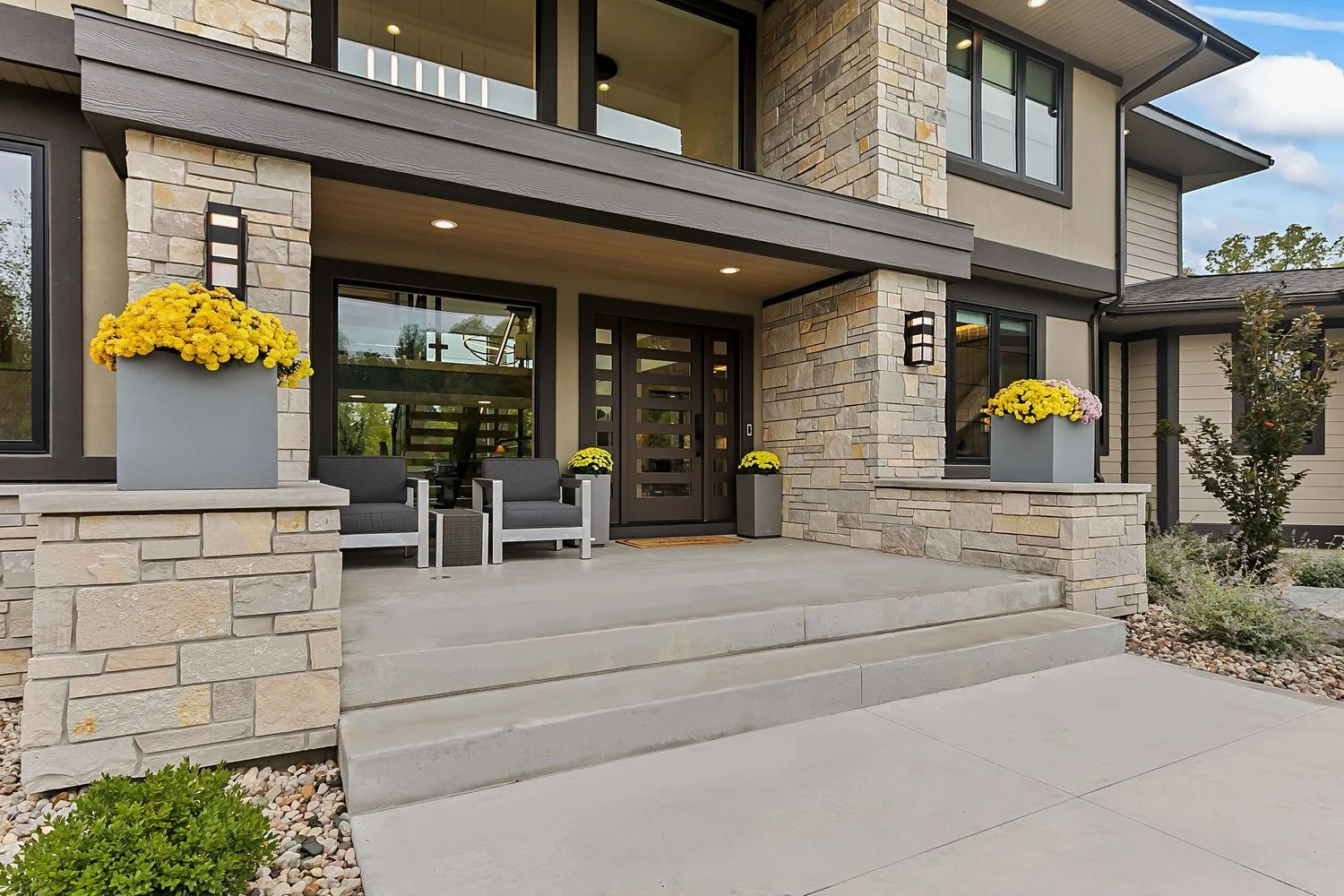
A door that looks beautiful in a showroom can feel out of place on a finished home. Review it alongside the rooflines, siding, stone, windows, porch columns, and exterior lighting.
A traditional home may suit a paneled door with restrained glass detailing. A Craftsman design may call for a substantial profile and a smaller upper glass section. A contemporary home may benefit from simpler lines and carefully proportioned glazing.
These are starting points, not rules. Look for a shared design language rather than matching every finish exactly. Our custom home portfolio can help you compare how entryways relate to the rest of a home's exterior.
Then consider daily use. Will guests wait beneath a covered porch? Does the door open toward a closet or staircase? Will you regularly move furniture through the entry? Plan the door swing, landing, lighting, and clear passage together.
Compare Wood, Fiberglass, and Steel
The material affects appearance, maintenance, and cost, but it does not tell the whole performance story. Compare actual products, including their frames, glass, weatherstripping, and warranties.
Wood: Natural Character With Ongoing Care
Wood offers distinctive grain, warmth, and opportunities for custom detailing. It can be a strong design choice when the material is central to the home's character.
It also requires a realistic maintenance plan. Moisture and sunlight affect the finish, and exposure can influence how often it needs attention. Masonite's exterior door maintenance guidance explains that wood generally requires more maintenance than steel or fiberglass.
Before selecting a wood door, review the manufacturer's exposure requirements, finishing instructions, and warranty conditions. A protected entry can help, but it does not eliminate maintenance.
Fiberglass: Versatile Appearance and Practical Upkeep
Fiberglass doors are available with smooth surfaces or woodgrain textures, making them adaptable to several architectural styles. Insulated models can be worth considering when you want a woodlike appearance with a different maintenance profile.
Inspect a full-size sample when possible. Grain realism, panel depth, glass surrounds, and finish quality vary. Fiberglass still needs cleaning, finish inspection, and care for the frame, seals, and hardware.
Steel: A Straightforward Option to Evaluate
Insulated steel doors can provide a clean painted appearance and may offer a practical price point, depending on the product and configuration.
Consider how the surface will handle daily use and how damaged finishes would be repaired. Dents and exposed metal deserve attention. Do not assume a steel door is automatically more secure or more efficient than every alternative. The complete assembly matters.
Choose Glass for Light, Privacy, and Proportion
Glass can brighten a foyer and make an entry feel more open. It also changes sightlines into the house.
Consider what someone on the porch can see during the day and after dark. Obscure or textured glass can soften views, but the privacy effect depends on the pattern, lighting, and distance. Review samples under realistic conditions.
Sidelights bring light beside the door. A transom adds glass above it. Either can help balance a taller or wider entry, but both affect the overall opening and budget. Compare a single door with sidelights against double doors before deciding which arrangement best suits the facade and floor plan.
Ask your builder and supplier to confirm the appropriate safety glazing and compatible security options for the selected configuration. Decorative glass should be evaluated as part of the complete entry system.
Look Beyond the Insulation Claim
An insulated slab is only one part of an efficient entry. Glass, the frame, the threshold, weatherstripping, and installation all influence performance.
Use the product's certified ratings to compare specific configurations. U-factor describes heat transfer; lower values indicate less heat transfer. Solar heat gain coefficient, or SHGC, describes how much solar heat passes through the product. The right combination depends on the home and exposure.
ENERGY STAR's guidance for windows, doors, and skylights explains that door qualification accounts for the amount of glass as well as applicable performance requirements. Confirm the selected model and glass package rather than relying on a general claim about an entire product line.
For a West Michigan home, discuss winter comfort, afternoon sun, and the protection offered by the porch. Ask how the door selection fits the home's overall energy goals. Avoid comparing a slab-only insulation value with a whole-product rating as if they measure the same thing.
Plan Security and Hardware as a System
A lock depends on the structure around it. Review the slab, jamb, strike reinforcement, hinges, glass, and installation together.
Ask the supplier about tested performance and compatible hardware. A multipoint lock may be available on some systems, but compatibility and proper adjustment matter. Hardware should also feel comfortable in your hand and operate without forcing the door into position.
If you want a smart lock, confirm the door preparation, hardware compatibility, power source, and backup access method before ordering. Think through guest access and battery replacement as well as appearance.
Coordinate the handle set with lighting and nearby finishes, but give daily operation equal attention. An oversized pull or decorative handle should still be easy to use.
Give Installation the Same Attention as Design
A well-selected door can disappoint if the opening is poorly prepared or water has no reliable path out.
The installation plan should address a supported sill, proper fastening and alignment, flashing integrated with the wall's water-control layers, and interior air sealing. These details must follow the product instructions and suit the wall assembly.
The Building America Solution Center's guidance on flashing windows and doors explains why integrated flashing helps direct water away from vulnerable openings. It also identifies porch roofs and overhangs as useful protection from rain and snow.
Coordinate the threshold with interior flooring and the exterior landing early. Discuss comfortable access, drainage, and weather protection together. A low threshold requires careful detailing rather than simply choosing the shortest available sill.
At the final walkthrough, check that the door swings freely, latches without slamming, locks smoothly, and makes consistent contact with its seals. Review the maintenance instructions with the rest of the home's care information.
Budget for the Complete Entry
Compare installed systems rather than slab prices. Glass, sidelights, transoms, custom sizes, factory finishing, hardware, trim, delivery, and installation can all change the total.
Ask what is included in each proposal and which selections must be finalized before framing. Confirm lead times with the supplier, especially for custom configurations.
It is often easier to adjust a finish or decorative detail during planning than to change the opening after construction has progressed. Celebrity Builders' home building process provides a starting point for understanding how selections fit into the broader project.
Core Insights
Choose the door alongside the architecture, porch, windows, and interior layout.
Compare wood, fiberglass, and steel through actual product specifications and maintenance requirements.
Evaluate glass for privacy after dark as well as daylight and curb appeal.
Review certified performance for the exact door and glass configuration.
Treat security, water management, air sealing, and installation as parts of one system.
Budget for the complete installed entry and confirm selections before the opening is built.
Frequently Asked Questions
1. What is the best front door material for a West Michigan custom home?
The best material depends on the design, exposure, maintenance expectations, and budget. Fiberglass is worth comparing for versatility, wood for natural character, and steel for a painted entry. Evaluate each specific system rather than choosing by material alone.
2. Is fiberglass always more energy efficient than wood or steel?
No. Performance varies by construction, glass area, frame, and configuration. Compare certified whole-product ratings and discuss air sealing and installation with your builder.
3. Can I have glass in my front door and still maintain privacy?
Yes, with thoughtful glass placement and selection. Smaller glass sections, textured glass, or a transom may help. Review samples from both sides under daytime and nighttime lighting because privacy varies.
4. Are double front doors better than a single door with sidelights?
Neither is universally better. Double doors may suit a broad entry and provide flexibility when both leaves open. A single door with sidelights offers a different balance of light, proportion, and everyday operation. Compare layout, sealing details, hardware, and cost.
5. Does a covered porch eliminate front door maintenance?
No. A porch can reduce direct exposure, but finishes, seals, thresholds, and hardware still need care. Follow the manufacturer's instructions and inspect the entry regularly.
6. When should we choose the front entry door during construction?
Choose the size and configuration early enough to coordinate framing, the porch, and adjacent finishes. Confirm the ordering deadline with your builder and supplier because lead times vary.
7. What should we check before approving the installed door?
Check smooth movement, easy latching and locking, consistent seals, the threshold transition, and the finish. Ask your builder to review the flashing and air-sealing work before those details are concealed, and keep the product's care and warranty information.
Create an Entry That Belongs to Your Home
A front door should feel right from the street and work well every time you come home. The strongest choices balance architectural character with comfort, privacy, security, and a practical care plan.
Planning a custom home in West Michigan? Contact Celebrity Builders to discuss an entry that fits your home and the way you live.